— SELECT CHAPTER —
01Origin StoryWhere the obsession began▸ 02Selected WorkThree projects, one obsession▸ 03The PlayerNear-pro in three shooters▸ 04LoadoutSkills & tools▸ 05Beyond the ScreenLeadership & life▸ 06DocumentsPortfolio PDFs▸ ▼ DOWNLOAD PORTFOLIO PDF
A radiant golden trophy floating above a stone colosseum arena under an aurora-filled night sky
Player Profile · Online Shanghai, China Class of 2027 · Fall 2027 Applicant

I design the moment
after the final enemy falls.

I'm ZiRui "Jimmy" Zhao — a senior in Shanghai who builds games with Unreal Engine 5 and Blender, plays shooters at a near-pro level, and pauses other people's games to ask one question: who put this feeling here — and how?

Main Quest
Game Design & Development
Engines
UE5 · Blender · Blueprints
Playable Builds
5 + Builds
Side Quest
Near-Pro FPS Player
Scroll
01 // Origin Story

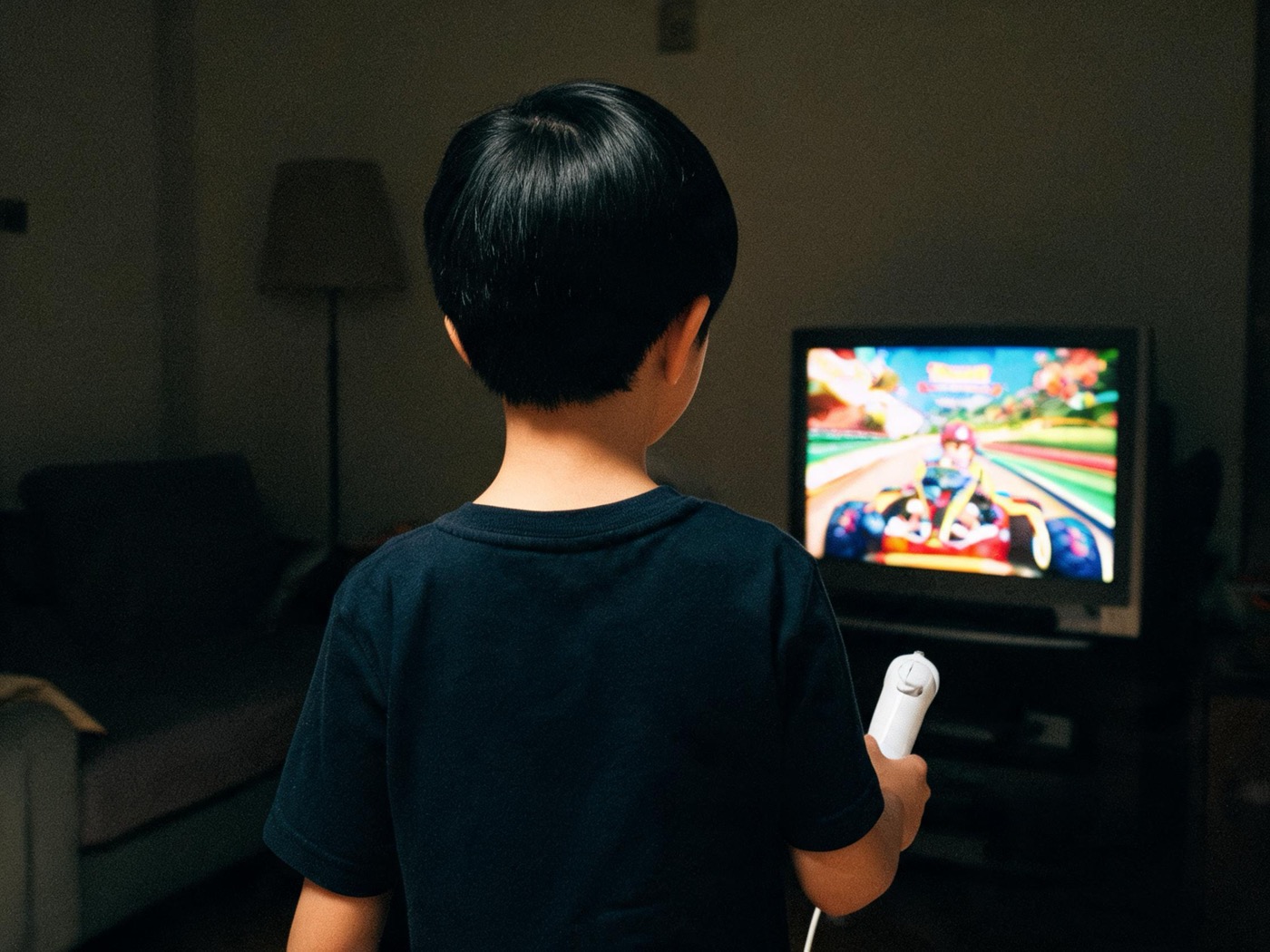
From family Wii nights
to a spinning golden trophy

When my dad brought home a Wii, Mario Kart became our family game. What stuck with me wasn't the racing — it was the moment after the finish line, when the game celebrated with you. Years later, Counter-Strike had me pausing to study maps: why does one route feel dangerous while another offers exactly enough cover?

Somewhere between those two games, I realized that a player's feelings are built by people whose names the player never sees. I decided to become one of those people.

"The trophy spun like a top. I fixed it without understanding why — and that bothered me more than the bug." — the moment I knew I needed formal training, not just tutorials

Teaching myself Blender and Unreal Engine 5 from Bilibili and YouTube tutorials, I built a five-level top-down shooter. The final level was a colosseum whose stone columns blocked enemy fire — the map itself joined the fight. When the last enemy fell, a golden trophy descended into the arena, with the camera at ground level, looking up.

Later I could finally explain my own instincts: the low angle makes the trophy loom; the slow rotation gives the win a few extra seconds to land. Today, I want to learn to explain every choice I make — and then build it.

Mario Kart · celebration CS maps · tension study First UE5 game · 5 levels
A boy seen from behind in a dark living room, lit only by the warm glow of a kart-racing game on TV, Wii remote in hand
FIG.01 Tribute art — the family Wii night where it all started
02 // Selected Work

Three projects, one obsession:
mechanics that make players feel

A solo puzzler where shooting is movement, a board game sharpened by playtesting, and a team-built first-person descent into a mind that won't stay stable. Full case studies are in the portfolio PDF.

Project 01 Aim & Recoil FIG. SET ↓
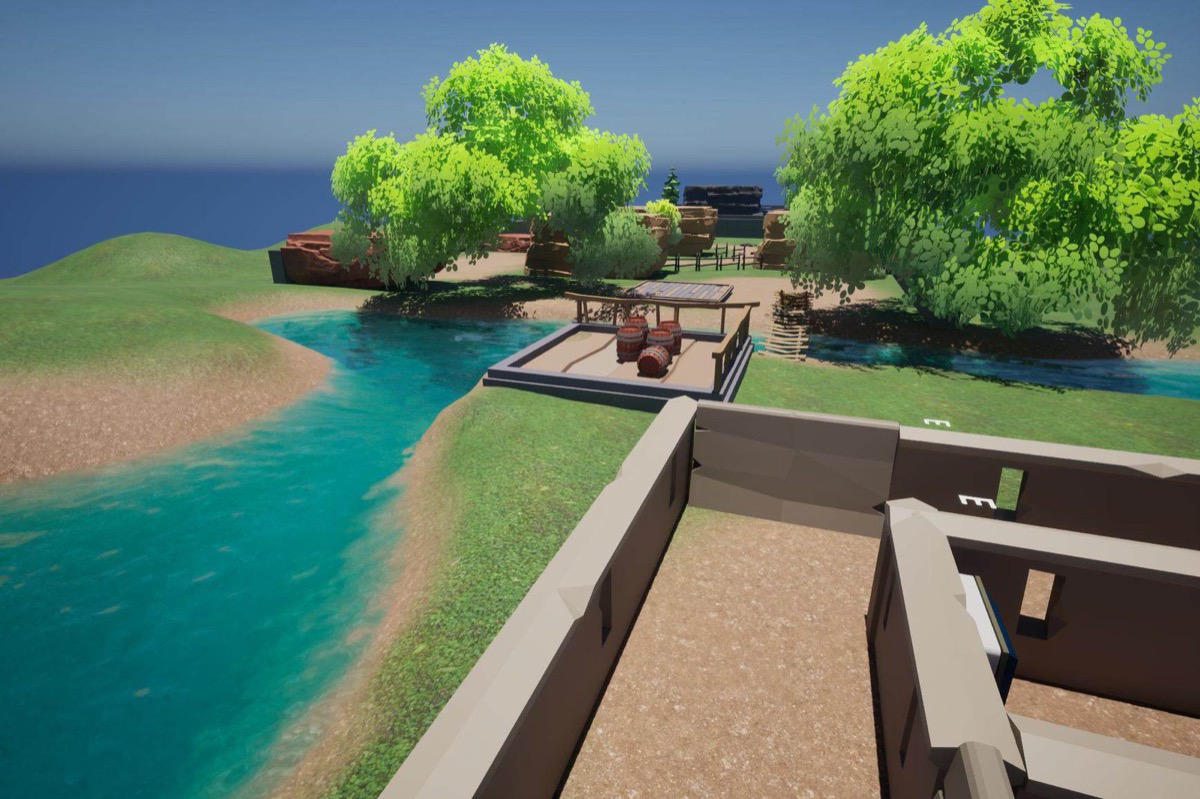
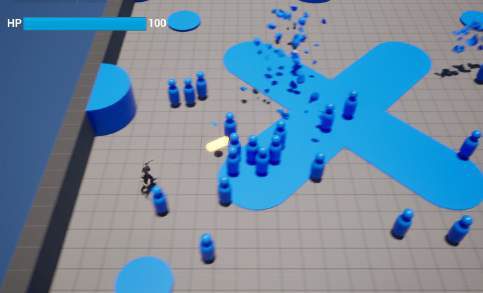
Aim & Recoil key art — low-poly island with wooden platforms
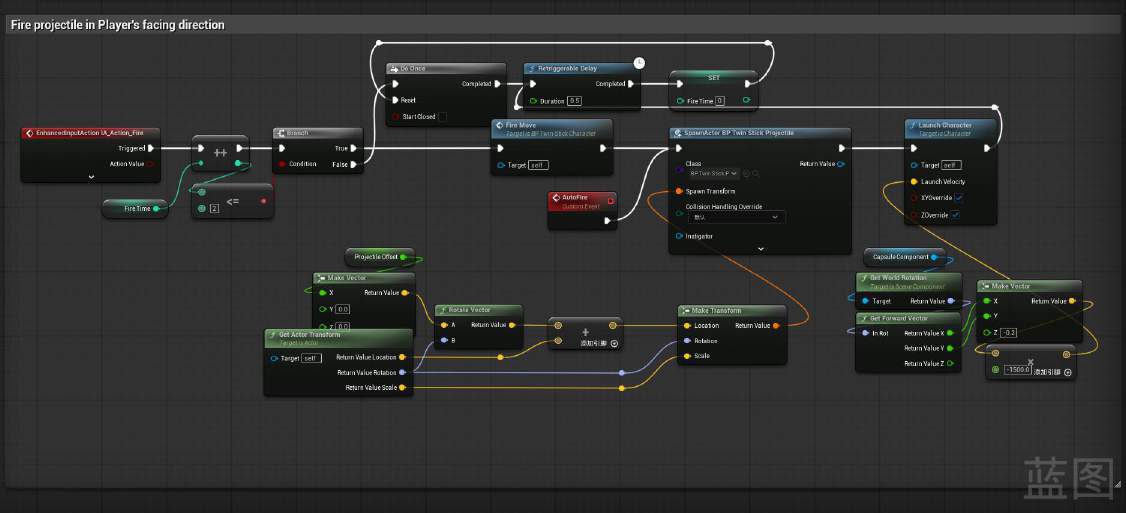
Blueprint graph: fire projectile in player's facing direction with Launch Character recoil
Blueprint · recoil force
Armored anime-style character with spiky black hair and black-purple outfit
Protagonist · AI→3D pipeline
Gameplay Reel · Autoplay WATCH ON YOUTUBE ↗
PROJECT 01 · NOV 2025

Aim & Recoil

Solo project · Designer / Programmer / Artist

The pitch: jumping by itself wasn't enough. So every shot fires a bullet and launches you backwards — Newton's third law as a traversal verb. Players chain recoil-jumps with normal jumps to cross gaps no ordinary jump can clear.

Under the hood I used UE5's Launch Character node after each shot, then learned to tune it like a designer, not an engineer: after several test builds I capped fire at 2 shots with a 0.5s cooldown — infinite flight would have broken every puzzle I built.

Engine
Unreal Engine 5.6 · top-down twin-stick template
Genre
Platform-jumping puzzle shooter
Levels
Start → Puzzle Maze → Jumping Island → Axe Dungeon → Boss Arena
Systems
Ghost chaser enemy · axe slasher · stepless two-way switch doors
  • Art pipeline: AI prompt → image → 3D model → rigging, composed in Blender; free assets from the Epic FAB store
  • Design rule I keep: each level teaches one verb, then combines two
▶ Watch the full gameplay video
youtu.be/XQh97gIjUuw · by JimmyZZZ
Project 02 Corporate Battle FIG. SET ↓
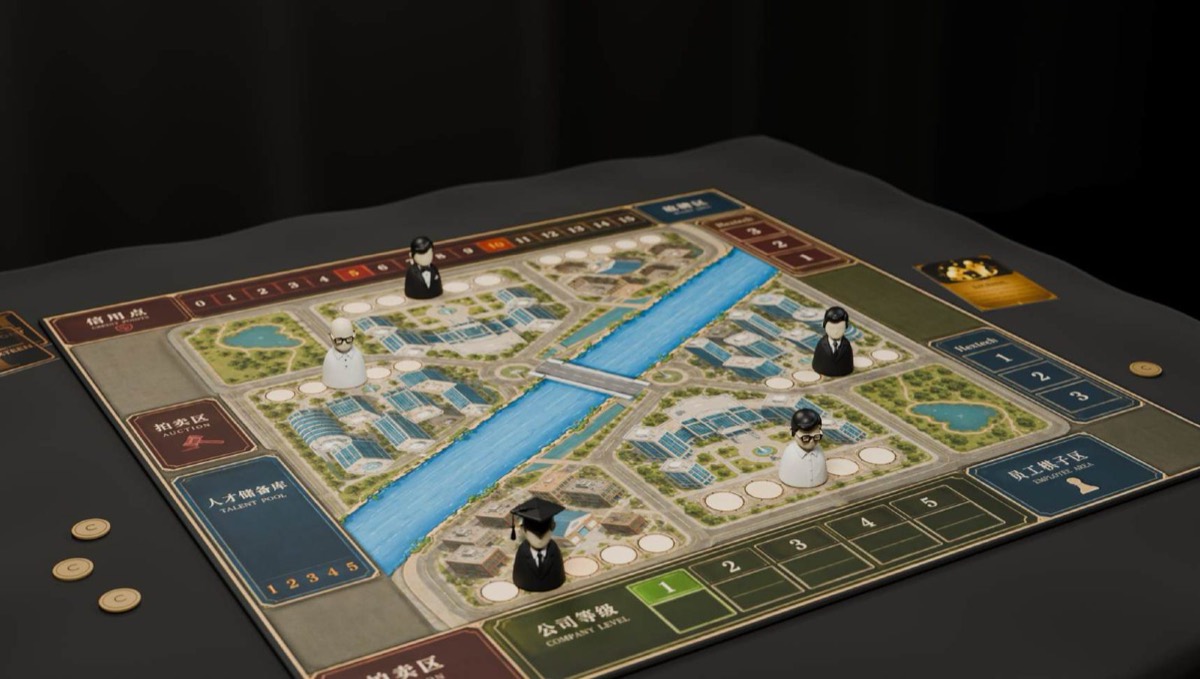
Corporate Battle — two CEOs run rival startups across 12 rounds of recruiting, synergy-building and market combat
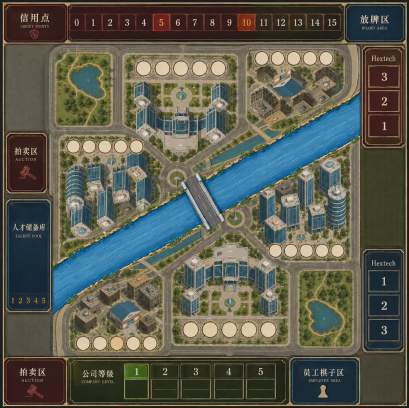
Final board map version 3 with credit track, talent pool, auction area and company level track
Board · map v3 (final)
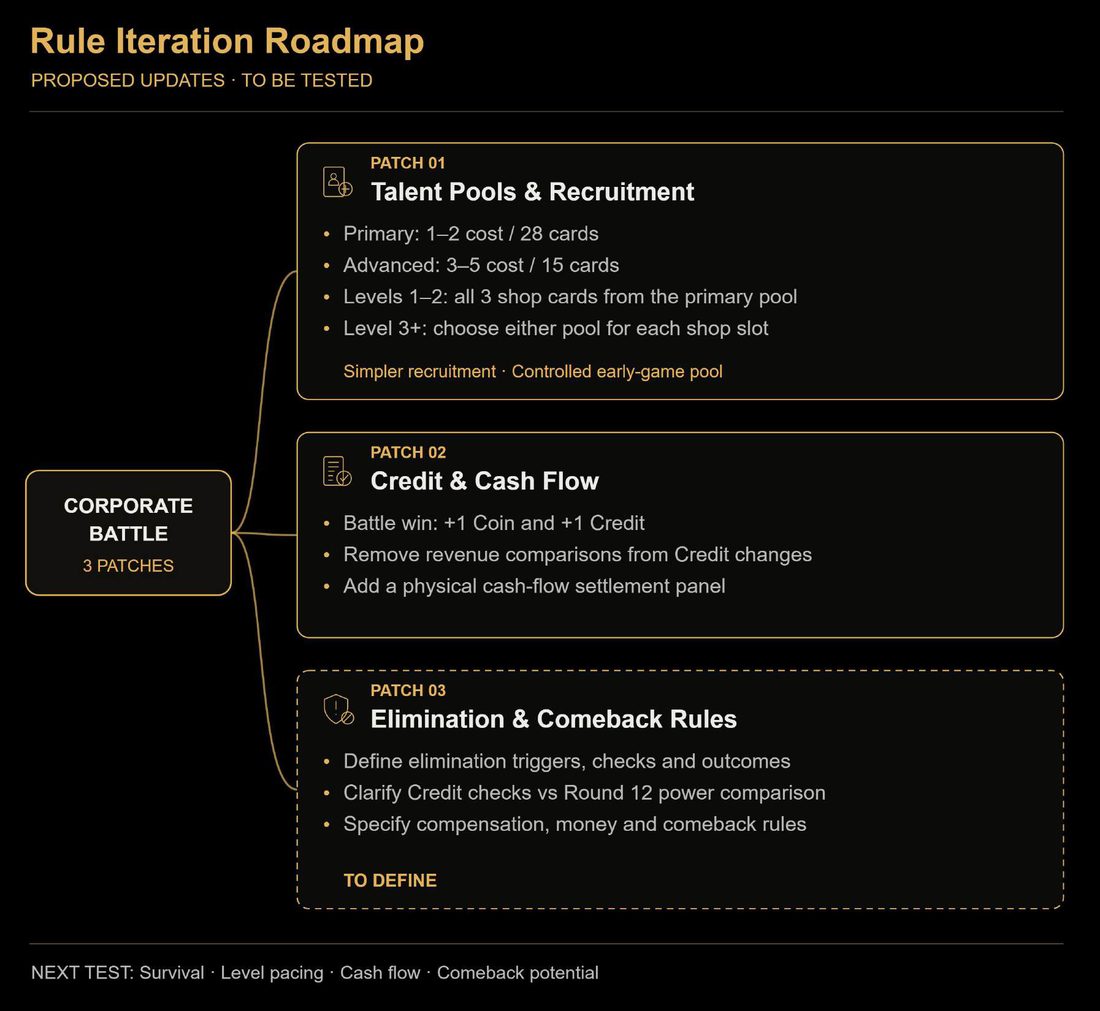
Rule iteration roadmap with three proposed patches based on playtest findings
Playtest → 3 patches
PROJECT 02 · JAN 2026

Corporate Battle

Solo design · Systems / Economy / Physical prototype

The pitch: a deck-building board game of corporate warfare. Two CEO-players recruit talents, arrange workstations, activate synergy bonds and survive random events — over 12 rounds, whoever builds the stronger company wins.

Inspired by Teamfight Tactics, I rebuilt its economy and synergy systems for a tabletop: 43 talent cards, 5 company levels, global buffs, runes, and a physical cash-flow settlement panel I 3D-printed and iterated through three board versions.

Players
2 · symmetric PvP · up to 12 rounds
Core loop
Start → Operate (recruit / refresh / upgrade / lay off) → Settle
Components
43 talent cards · level cards · runes · coins & credit markers
Win condition
Round-12 total company power comparison
  • Playtests found real problems: companies hit 0 coins by round 3–4; Level-3 snowballing created unrecoverable power gaps
  • Proposed the fixes: cap combat losses, rebalance the Level-3 upgrade cost and talent-pool access, clarify edge-case timing — and scheduled the next playtest to verify them
Project 03 Duality: Alienation FIG. SET ↓
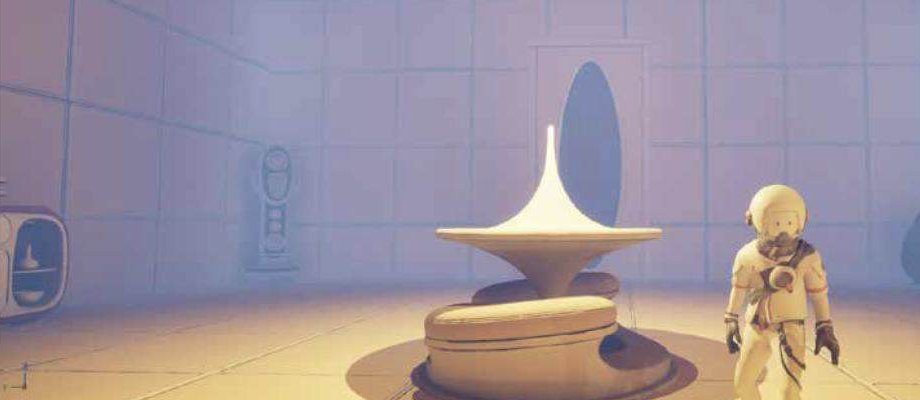
Duality Alienation — clean primary space: white tiled room with glowing central pillar and astronaut character
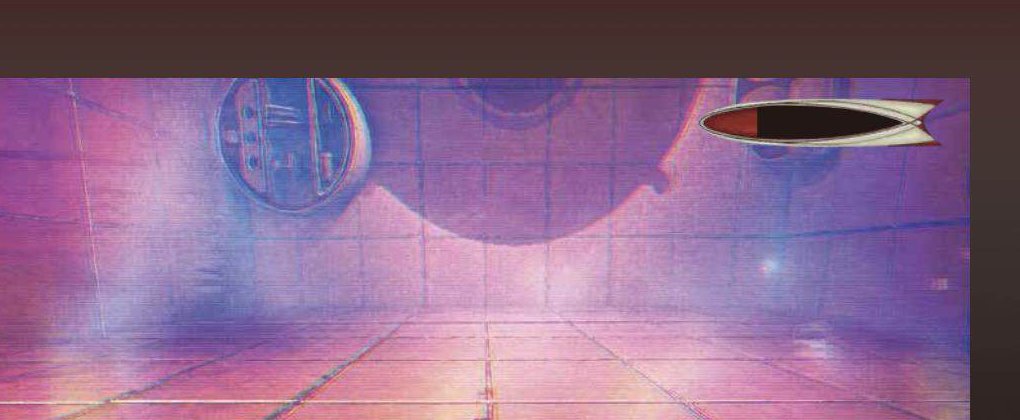
Primary space at high sanity
Sanity: stable — controlled interior
Distorted room at low sanity with chromatic aberration and magenta haze
Sanity: low — the room lies to you
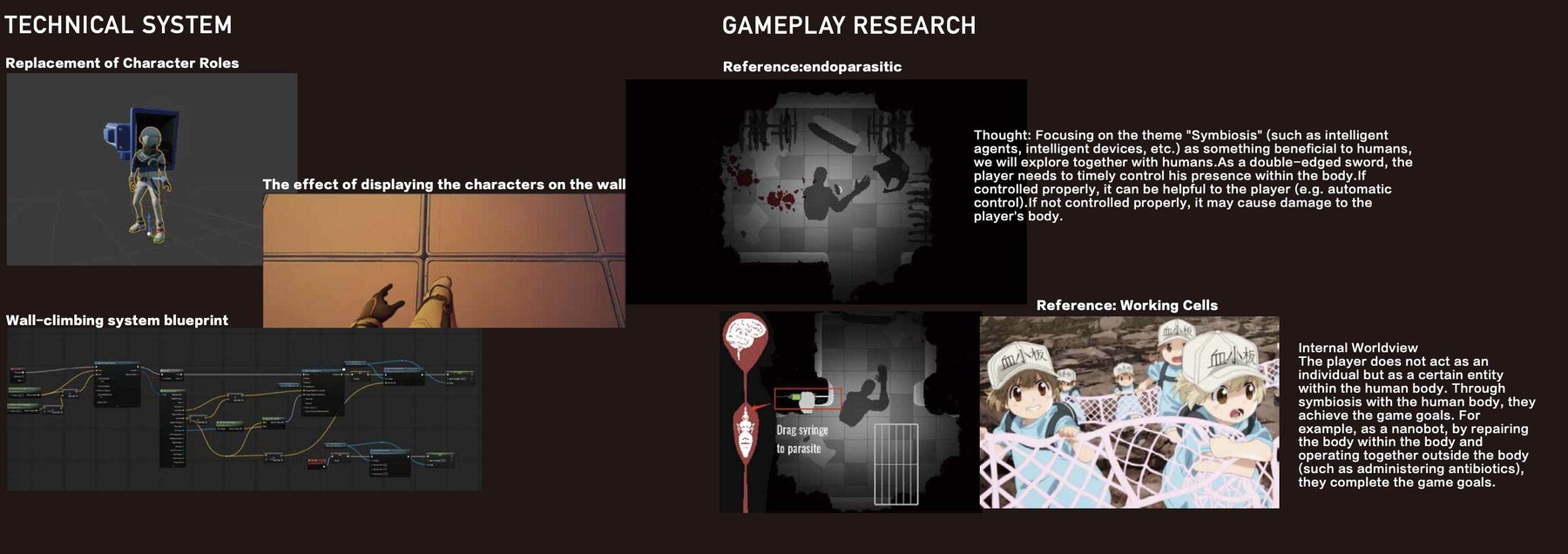
Technical system board: wall-climbing blueprint and gameplay research
PROJECT 03 · MAY 2026

Duality: Alienation

Team of 3 · Jimmy — Technical Designer (with Adam, props/character art · Mike, gameplay)

The pitch: a first-person puzzle demo about an android with two competing personalities. The protagonist searches a room that rotates without warning for an inhibitor — while a sanity meter decides whether the world around them can be trusted.

My systems made the psychology playable: as sanity decays, chromatic aberration, ghosting and blur scale up — visual feedback as both a gameplay indicator and a narrative device. The lower your sanity, the harder it becomes to tell reality from distortion.

My systems
Wall-climbing traversal (Blueprint) · sanity-driven post-processing
Genre
First-person puzzle · team project
Research
Retro-object aesthetics · institutional space · repetition & control
References
Endoparasitic · Cells at Work! · Milo
  • What team production taught me: my wall-climb blueprint only mattered once it fit Adam's rooms and Mike's pacing — systems serve the experience, not the other way around
03 // The Player

Near-pro in three shooters —
and it's research

Before I built games, I studied them as a player. In Peace Elite (PUBG Mobile), Counter-Strike and Delta Force, I've put in the hours — thousands of them — and play at near-professional level with match data to back it up. I take notes like a designer: rotations, economy decisions, utility timing.

Competitive play is my fieldwork. After hundreds of rounds on the same chokes, I understand in my hands, not just my head, why a map makes a fight exciting without feeling unfair. Every level I build starts from that library of feelings.

The dream this feeds: a co-op shooter where victory belongs to the whole team — where the player who hauled the ammo and did the reviving feels the ending as much as the top fragger. Rewarding kills is a solved problem. This one isn't — that's why I want it.

// Competitive Profile
Peace EliteBATTLE ROYALE · NEAR-PRO
Counter-StrikeTACTICAL FPS · NEAR-PRO
Delta ForceEXTRACTION · NEAR-PRO
Thousands of competitive hoursROTATIONS · ECONOMY · UTILITY
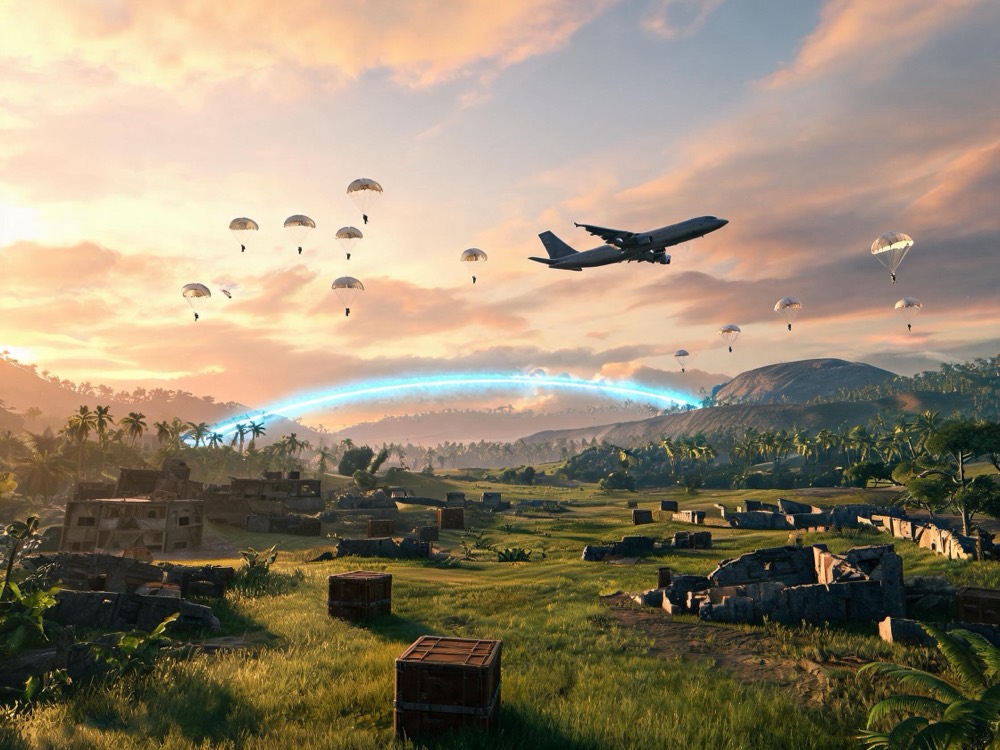
Battle royale airdrop at golden dusk — supply crates, parachutes and the blue zone closing inBattle Royale
Peace Elite · Near-pro

Where I learned squads

Where to land. When to rotate. When to fight, and when to just vanish. Battle royale taught me that a squad's survival is a design problem, not an aim duel.

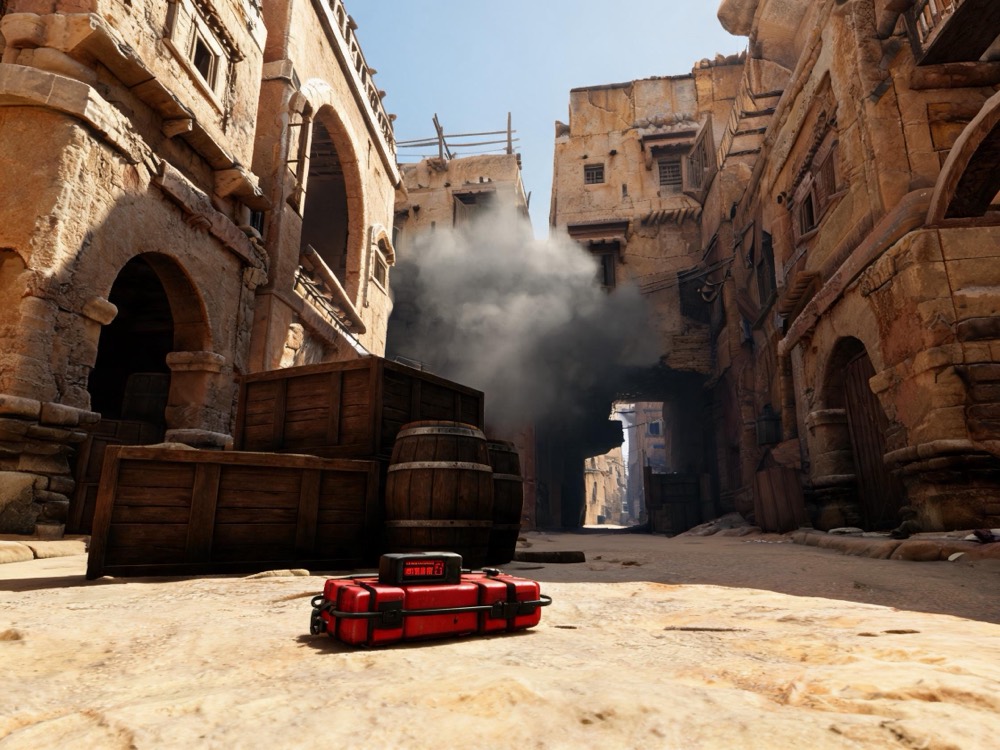
Tactical FPS bomb site under desert sun — C4 planted, smoke blooming across midTactical FPS
CS:GO / CS2 · Near-pro

Where I learned maps

I stop mid-match to study routes: why this corner feels dangerous, why that crate offers exactly enough cover. CS is where I first realized someone designed these feelings — deliberately.

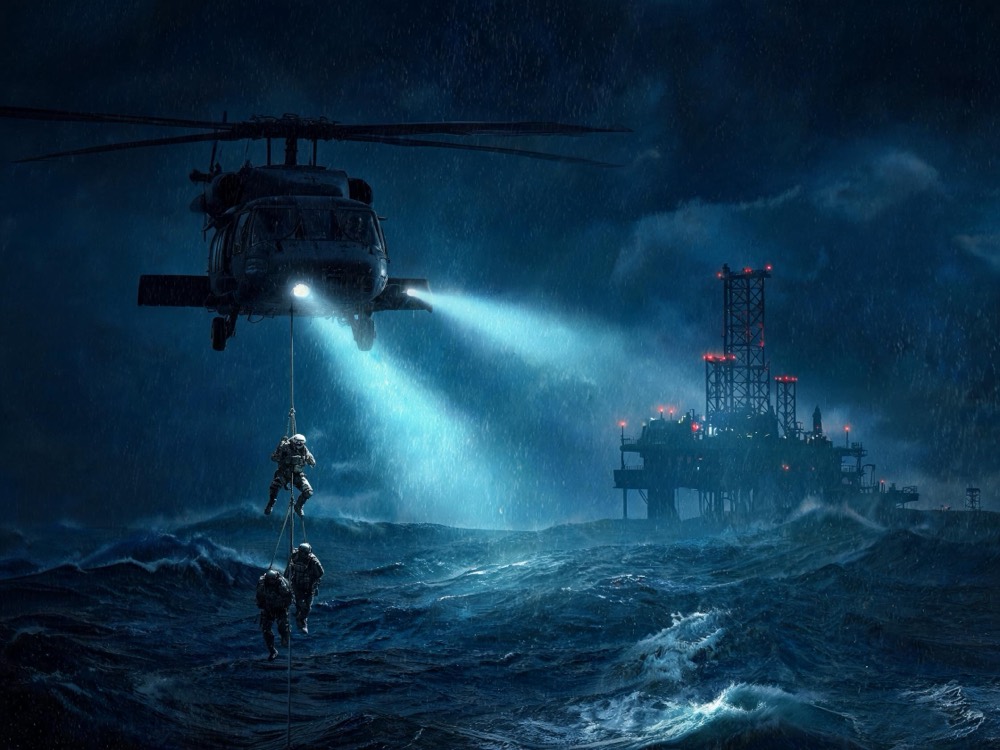
Night extraction — helicopter over a searchlight-swept landing zone, red flare smokeExtraction Shooter
Delta Force · Near-pro

Where I learned tension

One more room, or extract now? Every raid asks that question, and it gets louder the longer you survive. Playing extraction at a high level is a live lesson in pacing — I build that same tug-of-war into my own levels now.

* Artwork above is AI-generated tribute art inspired by each genre — not official game assets.

04 // Loadout

What's in the inventory

Self-taught through Bilibili and YouTube tutorials — now looking for the formal system behind the tricks.

Unreal Engine 5

Engine · Blueprints · Gameplay

Four playable student builds: twin-stick shooting with Launch Character physics, stepless switch-door systems, enemy AI behaviors, and sanity-driven post-process stacks. I prototype fast, then interrogate why each node works — AP CS A is the class I'd teach, starting from my own game bugs.

PrototypingLv.8

Blender & 3D Art

Modeling · Props · Environment

Character and prop creation for my projects, from blockout to final materials — including the colosseum columns that taught me cover is gameplay, not scenery. I pair hand-modeled assets with curated free resources, always crediting sources.

3D CraftLv.7

AI Pipeline — With Judgment

Prompt → Image → 3D → Rig

I run a working pipeline: AI prompt to concept image, image to 3D model, then rigging for engine-ready characters. But a tool that solves a problem I can't explain isn't a skill — it's a debt. When AI supplies an answer, I still need to understand the question.

AI WorkflowLv.7

Systems & Paper Design

Board games · Economies · Playtests

Deck-building economies, symmetric PvP balance, and rule patches driven by playtest data — economy collapse by round 3–4, Level-3 snowballing, and a coin-loss cap to speed recovery. Design is a loop: build, test, diagnose, patch, test again.

Systems ThinkingLv.8
05 // Beyond the Screen

The weather station that
survived a typhoon

17 members

Meteorology Club · Vice President

I led the build of a campus weather station — temperature, humidity, wind speed, air quality. When wind sensors needed height and no rooftop was open to students, we kept going back to the teacher in charge until we secured the second-floor terrace.

1 typhoon

Repaired in the Rain

A week after installation, a typhoon knocked the whole station over. We went out in the rain — sandbags around the weather box, tape on the casing, loose wires reconnected. Nobody asked whose job the mess was. That's the collaboration I want on every team.

1.5+ years

Still Logging Every Week

It's still running. I organize rotating duty rosters: climb up, check instruments, log readings. The proudest part isn't the install day — it's that the station didn't die after its first failure. Responsibility is often just the decision to return.

Research: Teenage Loneliness (China Thinks Big)

Five-member team studying how family atmosphere relates to teenage loneliness — surveys, data analysis, paper, posters, and an English-language presentation. My hardest lesson came from inside the team: hiding what I didn't understand isolated me from the very people studying isolation. Since then, I lead with my gaps visible. It's what made the weather station work — and it's how I'll show up on every team from here on.

A Little Brother & a Word Game

I once built a tiny word game for my little brother — and watched him choose to play it again. The smallest playtest data point I'll ever collect, and still my favorite.

Grade 10 · After switching to all-English AP
3.53
Fell behind in a new language. Hid confusion behind a notebook. Grades slid.
Grade 11 · Same classrooms, same language
4.51
Stopped hiding. Raised my hand, asked after class, rebuilt each course sentence by sentence.
Describe meOptimistic · Hands-on · Energetic
Dream jobGame designer
Theme song"Zenzenzense" — RADWIMPS
Favorite bookDo Androids Dream of Electric Sheep?
Dream tripRome's Colosseum (to compare with my arena) → Kyoto's Nintendo Museum
Ideal roommateLuffy — admits what he can't do, builds a crew whose strengths fit
Next bingeAttack on Titan — studying how buried clues make revelations click
Favorite movieGreen Book
"I can't place joy or tension directly into a game. I can shape the space, control what players notice, and decide how long a moment stays with them."
— My design philosophy, learned from a spinning trophy

Next stop: a university game design program — real players, real teams, real deadlines — so I graduate with games I can defend frame by frame.

06 // For Admissions Readers

Two documents, ready when you are

Open in your browser or download a copy — no email required.

Primary
PDF · 11 pages · ~6.6 MB

Design Portfolio

Full case studies of Aim & Recoil, Corporate Battle and Duality: Alienation — inspiration, technical research, level and puzzle design, blueprints, playtest iterations and final effects.

READ / DOWNLOAD
ZiRui-Zhao-Portfolio.pdf
PDF · 1 page · 0.3 MB

Portfolio List

The one-page index of my three projects with dates, genres, roles and short descriptions — the 60-second overview before you dive into the full portfolio.

READ / DOWNLOAD
ZiRui-Zhao-Portfolio-List.pdf